Last Updated on June 25, 2026 by Joy Editors
Quick answer: A typical wedding ceremony runs 20 to Half-hour and follows this order: prelude music → seating of family → processional → opening words → readings → vows → ring exchange → pronouncement → first kiss → recessional. Religious ceremonies add additional elements (prayers, communion, blessings) and typically run 45 to 60 minutes.
The marriage ceremony is the shortest a part of the marriage day and an important. Getting the order right — and communicating it clearly to your officiant, wedding party, and vendors — is what separates a ceremony that flows naturally from one which feels awkward and disjointed.
This guide covers the usual ceremony order, variations for religious and cultural ceremonies, timing for every element, and practical suggestions for making all of it work on the day.
Standard Wedding Ceremony Order
- Prelude music (guests arrive and are seated)
- Seating of grandparents
- Seating of oldsters
- Wedding party processional
- Bride/partner processional
- Opening words and welcome
- Reading(s) — optional
- Officiant address
- Vows
- Ring exchange
- Unity ceremony — optional
- Pronouncement
- First kiss
- Introduction of the couple
- Recessional
Each Element Explained
Prelude music 20-30 min before
Prelude music plays as guests arrive and find their seats. It sets the tone before the ceremony officially begins. Select 4 to six songs that reflect your style — instrumental versions of meaningful songs work well, as do classical pieces or acoustic arrangements. The prelude ends when the processional begins.
Seating of grandparents and fogeys 5-10 min before
Grandparents are seated first, escorted by an usher or groomsman. Parents follow: the groom’s parents are typically seated first, then the bride’s mother (who’s traditionally the last person seated before the processional begins). In same-sex weddings, each sets of oldsters could be seated concurrently or in whatever order feels right.
Tip: Seating the bride’s mother signals to guests that the processional is about to start. Ensure that your ushers know this cue and that the music transition is coordinated along with your officiant or coordinator.
Wedding party processional Ceremony start
The marriage party walks down the aisle before the couple. Standard order:
- Officiant (already on the altar)
- Groom/partner, escorted by parents or walking alone
- Groomsmen and bridesmaids (paired or individually)
- Maid/matron of honor
- Best man (already at altar with groom, or walks with MOH)
- Flower girl(s) and ring bearer(s)
There’s no single correct order — coordinate along with your officiant and adjust based in your wedding party size and preferences.
Bride/partner processional Ceremony start
Probably the most anticipated moment of the ceremony. Traditionally the bride walks together with her father; today couples walk with each parents, alone, with a selected person, or in any configuration that’s meaningful to them. The processional song changes here — this is usually probably the most emotionally significant music alternative of the ceremony.
Opening words and welcome 2-3 min
The officiant welcomes guests and introduces the ceremony. A superb opening sets the emotional tone without being generic. Ask your officiant to personalize this section with something specific about you as a pair — a shared story, the way you met, what makes your relationship distinctive.
Readings 2-5 min each
Readings are optional but add depth and provides meaningful roles to individuals who aren’t in the marriage party. Most ceremonies include one or two readings. Select people who find themselves comfortable speaking in public and who’ve a real connection to you as a pair.
Popular reading sources: poetry (Pablo Neruda, Mary Oliver, e.e. cummings), literature (Captain Corelli’s Mandolin, The Velveteen Rabbit), scripture (for religious ceremonies), or original pieces written by the reader.
Officiant address 3-7 min
The substantive middle of the ceremony. The officiant speaks about marriage, your relationship, and what this commitment means. That is where personalization matters most — a generic address about “love and partnership” is forgettable. A superb officiant will interview you each before the marriage and weave your specific story into this section.
Vows 3-8 min
The legal and emotional core of the ceremony. You’ve gotten two options: traditional vows (provided by the officiant, repeated after them) or personal vows (written by each partner).
Personal vows are more meaningful but require preparation. Keep them to 1 to 2 minutes each — roughly 150 to 250 words. Longer vows lose the audience and might feel self-indulgent. Write them down and skim from paper or cards; attempting to memorize them adds unnecessary stress.
Tip: For those who’re writing personal vows, determine together whether to maintain them secret until the ceremony or share drafts beforehand. Sharing drafts reduces the danger of wildly mismatched lengths or tones.
Ring exchange 2-3 min
The officiant guides the ring exchange with words in regards to the symbolism of rings — their circular shape representing continuity, the metal representing strength. Each partner places the ring on the opposite’s finger while repeating a brief phrase. Traditional: “With this ring, I thee wed.” Modern: personalized phrases that match your vow style.
Unity ceremony 3-5 min, optional
A unity ceremony is a symbolic ritual performed together. Common options:
- Unity candle: Each partner lights a candle from two individual candles, symbolizing two lives becoming one.
- Sand ceremony: Two colours of sand are poured together right into a single vessel. Popular for beach weddings or blended families (children can participate).
- Wine ceremony: Two wines are poured together and shared.
- Tree planting: Soil from each partner’s hometown is combined to plant a tree together.
- Handfasting: The couple’s hands are certain with ribbon or cord — a Celtic tradition increasingly popular in secular ceremonies.
Pronouncement 30 seconds
The officiant declares you married. Traditional: “By the ability vested in me, I now pronounce you husband and wife.” Modern ceremonies use gender-neutral language: “I now pronounce you married” or “I now pronounce you partners for all times.”
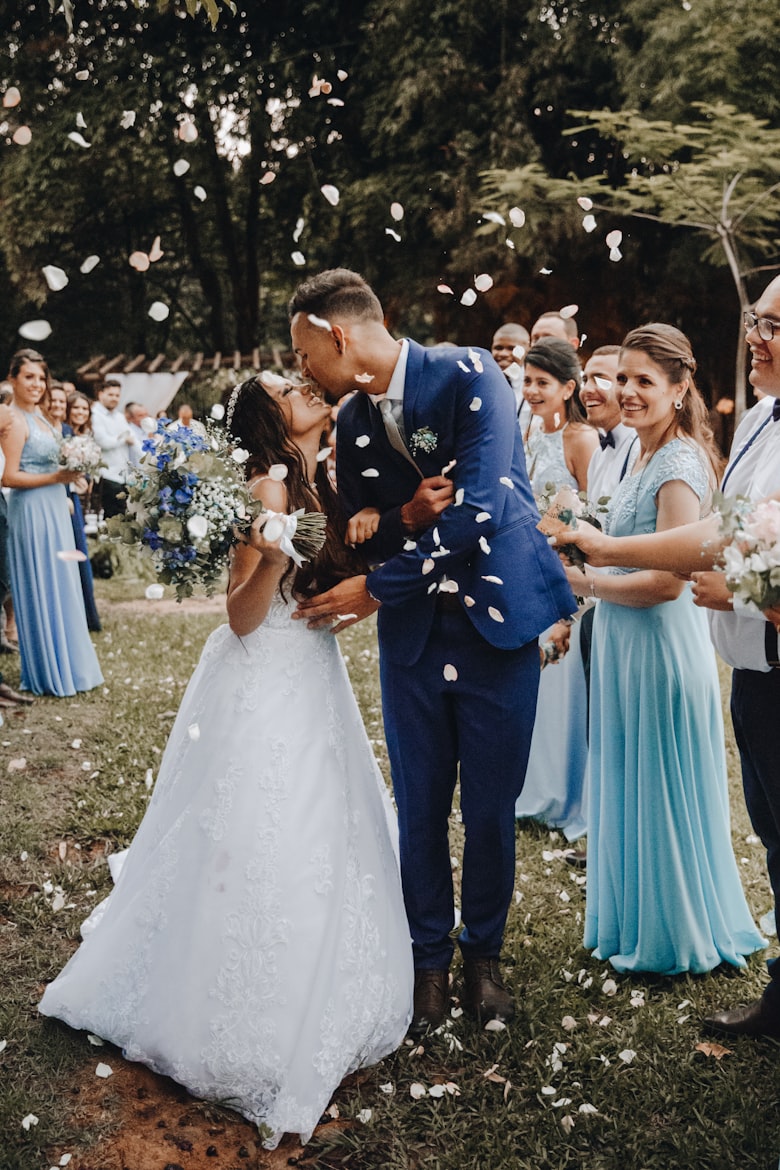
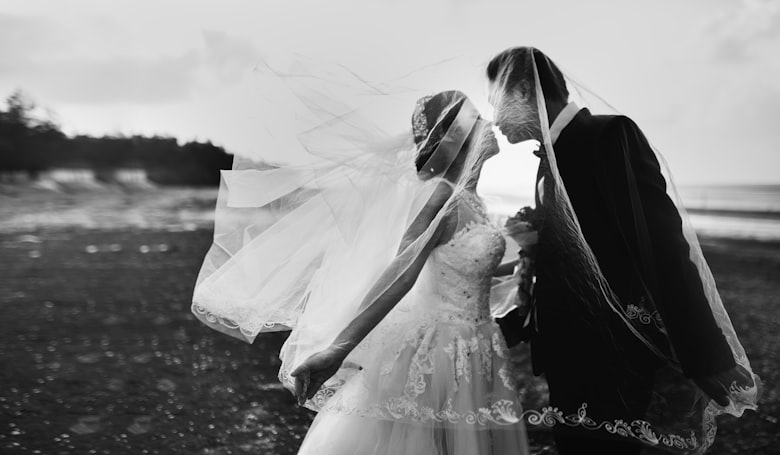
First kiss 30 seconds
The officiant cues the kiss: “You might now kiss.” Keep it transient — 3 to five seconds. The audience is watching and the photographer needs a clean shot. Practice if you happen to’re nervous about it.
Introduction and recessional 2-3 min
The officiant introduces you as a married couple: “Ladies and gentlemen, for the primary time as a married couple, please welcome [names].” The recessional music begins and also you walk back up the aisle together, followed by the marriage party in reverse processional order.
Religious Ceremony Order
Catholic ceremony (45-60 min with Mass, 20-30 min without)
| Element | Timing |
|---|---|
| Processional | Ceremony start |
| Greeting and opening prayer | 2-3 min |
| Liturgy of the Word (readings, Gospel, homily) | 15-20 min |
| Rite of Marriage (consent, vows, rings) | 10-15 min |
| Nuptial blessing and prayers | 5-10 min |
| Liturgy of the Eucharist (if full Mass) | 20-25 min |
| Final blessing and dismissal | 3-5 min |
| Recessional | 2-3 min |
Jewish ceremony (20-30 min)
| Element | Notes |
|---|---|
| Processional under the chuppah | Each sets of oldsters escort the couple |
| Betrothal ceremony (Kiddushin) | Blessings over wine, ring exchange |
| Reading of the Ketubah | Marriage contract |
| Seven blessings (Sheva Brachot) | Recited by guests or rabbi |
| Breaking of the glass | Followed by “Mazel Tov” |
| Recessional | Couple exits first |
Ceremony Timing Guide
| Ceremony Type | Typical Duration |
|---|---|
| Civil/non-religious (easy) | 15-20 minutes |
| Civil/non-religious (with readings) | 25-35 minutes |
| Interfaith | 30-45 minutes |
| Jewish (without full service) | 20-Half-hour |
| Protestant | 30-45 minutes |
| Catholic (without Mass) | 25-35 minutes |
| Catholic (with Mass) | 60-75 minutes |
Constructing Your Ceremony Timeline
Work backwards out of your ceremony start time. In case your ceremony starts at 4:00 PM:
| Time | What’s Happening |
|---|---|
| 3:00 PM | Doors open, guests begin arriving, prelude music starts |
| 3:45 PM | Ushers begin seating family |
| 3:55 PM | Bride’s mother seated, processional music cued |
| 4:00 PM | Wedding party processional begins |
| 4:05 PM | Bride/partner processional |
| 4:07 PM | Ceremony begins (opening words) |
| 4:30 PM | Recessional (30-min ceremony) |
| 4:35 PM | Guests released to cocktail hour |
Share this timeline along with your officiant, coordinator, photographer, and musicians a minimum of one week before the marriage. Posting a simplified version in your wedding website helps guests know when to reach.
Common Ceremony Mistakes to Avoid
- Not doing a rehearsal. Even a 30-minute walkthrough prevents most processional and cue problems.
- Vows which might be too long. Over 3 minutes per person and the audience loses focus. Edit ruthlessly.
- No microphone for outdoor ceremonies. If greater than 50 individuals are attending, rent a sound system. Guests within the back rows should hear every word.
- Not communicating the timeline to your photographer. Your photographer must know when the primary kiss happens to be in position.
- Forgetting to cue the musicians. Processional and recessional music transitions need clear cues — assign someone (your coordinator or a trusted usher) to signal the musicians.
A marriage website is an incredible place to post your ceremony schedule, venue address, parking info, and dress code so guests arrive prepared.
Often Asked Questions
What’s the order of a marriage ceremony processional?
The usual processional order is: officiant takes position on the altar, then groom/partner (with parents or alone), then groomsmen and bridesmaids (paired or individually), then maid/matron of honor, then flower girl and ring bearer, then the bride/partner (with escort or alone). This order could be adjusted — there isn’t any single correct version. Coordinate along with your officiant to verify the order that works on your wedding party size and configuration.
How long should a marriage ceremony be?
A non-religious ceremony with personal vows and one or two readings runs 25 to 35 minutes. An easy civil ceremony could be as short as quarter-hour. Catholic ceremonies with full Mass run 60 to 75 minutes. Most guests are comfortable with 20 to 35 minutes — beyond that, attention starts to drift, especially for outdoor ceremonies in warm weather.
Who walks down the aisle first in a marriage?
The officiant is already on the altar. The groom/partner typically walks first (with parents or alone), followed by the marriage party, then the bride/partner last. In same-sex weddings, each partners can walk concurrently from opposite sides, or one can walk first — there’s no prescribed order. What matters is that you simply determine prematurely and communicate it clearly on the rehearsal.
Do you wish a rehearsal for the marriage ceremony?
Yes, for any ceremony with greater than 4 people in the marriage party. A rehearsal doesn’t have to be long — 30 to 45 minutes is often enough to walk through the processional order, positions, cues, and recessional. The rehearsal dinner typically follows immediately after. Couples who skip the rehearsal often have processional confusion, missed cues, and nervous wedding party members on the actual day.
What’s a unity ceremony and must you include one?
A unity ceremony is a symbolic ritual performed through the ceremony — lighting a candle together, pouring sand, planting a tree. It adds a visible, participatory element to the ceremony and provides guests something to look at beyond the vows. Include one if it’s meaningful to you; skip it if it appears like filler. The most effective unity ceremonies have a selected reason behind them (a family tradition, a meaningful symbol) somewhat than being included simply because “it’s what people do.”