Written by the WeddingPlan360 planning team. Every capacity and fee structure described here comes from resorts we hold contracts with, or from published industry studies named in the text.
Budget realistically for the wedding itself - ceremony, private reception, décor, florals, photography, a welcome event - and remember that your guests pay their own flights and rooms. The Knot’s 2025 Real Weddings Study puts the average international destination wedding at $41,000 all in, but averages hide more than they show: we have planned gorgeous weddings well under that number and multi-day celebrations well over it. What follows is how the pricing actually works at any guest count - and where the money genuinely goes.
How destination wedding pricing actually works
Nearly every resort wedding bill is built from the same four blocks:
- The wedding package - ceremony setup, an officiant for a symbolic ceremony, basic décor, often a small cake and sparkling toast. Many resorts include or heavily discount this once your group books enough rooms - and some extend WeddingPlan360 couples a large discount where effectively all of the core costs are included.
- The reception arrangement - how the resort structures your private celebration. The structure varies by resort and season, and at select properties there is no per-person cost at all (more on that below) - which is exactly why we shop the structure, not just the price.
- The room block - the rooms your guests book at a contracted group rate. Guests pay this themselves, but the rate you lock determines whether your guest list actually shows up.
- The extras - photography, entertainment, upgraded florals, hair and makeup, transfers. This is the block couples underestimate, and the one that actually drives the final number.
What changes as your guest count grows
The short answer: restrictions fall away. Small groups trade cost for constraints; big groups get the run of the resort.
| Guest count | What your wedding looks like |
|---|---|
| Under 30 | Most all-inclusives will seat you in a reserved section of a restaurant - a semi-private reception, often at no extra cost, since your guests’ rooms already cover the food. The trade-off is the resort’s rules: a set menu, shared space, usually no dance floor. |
| 30 to 100 | Your own private celebration - your venue, your menu, your music, a dance floor and speeches. This is the classic destination wedding, and it is where the room block starts earning real perks: comp rooms, package discounts, waived fees. |
| 100 to 300 | Multi-event territory - welcome party, ceremony, reception, farewell brunch, often across several venues. Resorts compete hard for groups this size, which is exactly when our negotiating does its best work. |
| 300 to 2,500 | The full-resort celebration - multi-day, multi-venue, the property planning around you. Only a subset of resorts can host at this scale (see the capacity table below), and the inclusions and discounts at this level are substantial. |
Here is the counterintuitive part: a bigger wedding is usually cheaper per person, not more expensive - and less restricted, too. Larger room blocks earn more complimentary rooms and unlock package discounts - at many resorts a big enough block waives the wedding package or the venue fee outright - and fixed costs like photography, DJ and décor spread across more guests. What actually moves a budget is not headcount. It is décor and entertainment choices: custom florals, staging, lighting, live acts. Two 80-guest weddings at the same resort can land $30,000 apart on those choices alone.
The no-per-person option almost nobody tells couples about
Here is a structure most couples never hear exists: a select number of resorts offer wedding setups with no per-person reception cost at all. Your guests’ own all-inclusive bookings cover their food and drink, and what you pay for is the décor and entertainment you choose - not a headcount.
Think about what that removes. The guest list stops being a budget line, which changes the entire conversation for couples and their parents - especially for big family celebrations where trimming the invite list is the most painful part of planning. Invite everyone. The wedding costs what your décor and entertainment choices cost, whether 80 people celebrate with you or 200.
This is a special arrangement that only some resorts offer, availability shifts with season and property, and the resorts that run it do not exactly advertise it. It is one of the things we surface for couples because we work with these properties directly - reach out and we will tell you which resorts currently offer it and whether your dates qualify.
Why venue capacity is the first thing to check
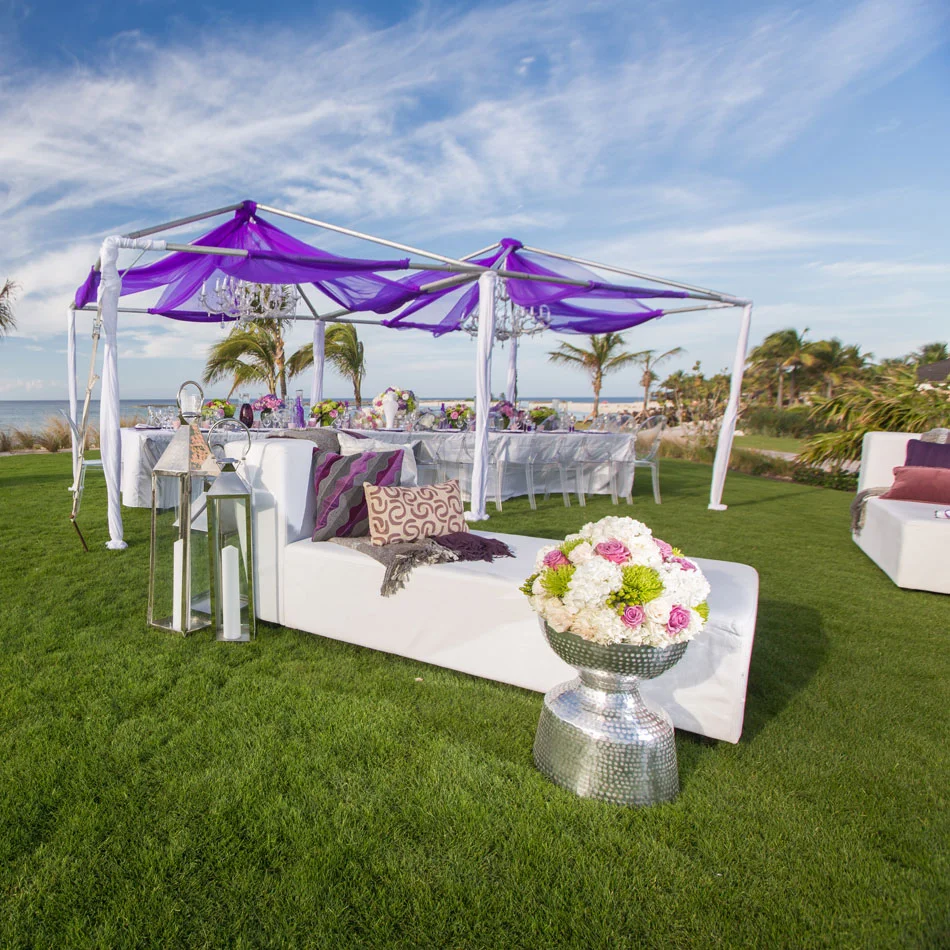
A guest list seated for dinner needs meaningfully more space than the same list standing for a ceremony - and resorts publish different capacities for each. Real examples from properties we work with, from intimate venues to the very largest:
| Resort | Venue | Stated capacity |
|---|---|---|
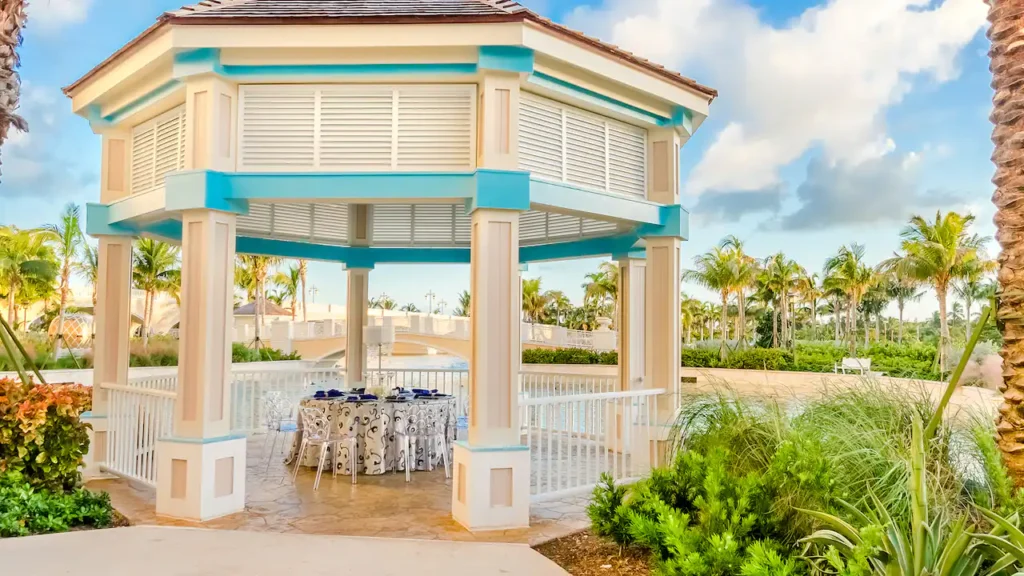
| Excellence Playa Mujeres | Stone Gazebo | 45 guests |
| Excellence Playa Mujeres | Beach | 70 guests |
| Waldorf Astoria Cancun | Wedding Pavilion | 60 reception |
| Garza Blanca Cancun | Beach Deck | 80 guests |
| Garza Blanca Cancun | Coco’s Beach | 300 ceremony / 240 reception |
| NIZUC Resort & Spa | Sian Ka’an | 432 ceremony / 500 cocktail |
| AVA Resort Cancun | Signature event spaces | up to 500 |
| Moon Palace Cancun | Full convention-scale venues | up to 2,500 |
The lesson at any size: a venue listed at exactly your headcount leaves no margin. If four extra cousins commit in month nine, you are moving venues. We build in a buffer of at least 15 to 20% over your expected count when we select space - and we check capacity first, before price, before aesthetics. It is a less romantic order of operations and it saves couples thousands.
How the room block works - and why it decides your real cost
Rough math: your guest count generally translates to about half as many rooms, depending on the mix of couples, singles and families. The mechanics at Mexico and Caribbean all-inclusives:
- Courtesy blocks are rare. Unlike a U.S. hotel, all-inclusive resorts generally require a contracted block with a deposit. You are committing, not reserving.
- Attrition clauses. Your contract commits you to filling a percentage of the rooms - often 80 to 90%. Rooms nobody books can become your bill.
- Drop dates. There is usually a date, commonly around six months out, when you can release unbooked rooms penalty-free.
- Complimentary rooms. Blocks typically earn free nights at a set ratio - frequently around one comp room per eleven booked. On a decent-sized block that is a real amount of money, and most couples apply it to their own stay.
The planner’s move is to contract conservatively and add rooms later - adding inventory when your block fills is easy; paying attrition on eight rooms nobody wanted is painful and avoidable. This is exactly where working with us pays for itself: WeddingPlan360 is deeply versed in room blocks - we structure the contract, watch the attrition exposure and the drop dates, and steer you around the issues couples hit doing this alone. We wrote a full guide to the arithmetic: how many rooms to block.
The welcome event - the easiest place to be smart
Your guests have flown a long way, and half of them don’t know the other half. Options, in ascending cost:
- An unhosted meetup - everyone gathers at the lobby bar on arrival night. At an all-inclusive the drinks are already paid for. Cost: zero. Works better than people expect.
- A reserved semi-private dinner at a resort restaurant - often free or low cost.
- A hosted private welcome cocktail hour - a second hosted event with its own venue and catering arrangement, typically lighter than the reception.
- An off-resort event - a beach club or restaurant in town, plus transport for your whole list.
Most couples we work with choose one of the first two and put the saved money into photography. That trade has never once been regretted.
The line items that finish the budget
- Photography and video - The Knot’s 2025 study puts the average destination wedding photographer at $3,015. Ask about outside-vendor fees before signing anyone.
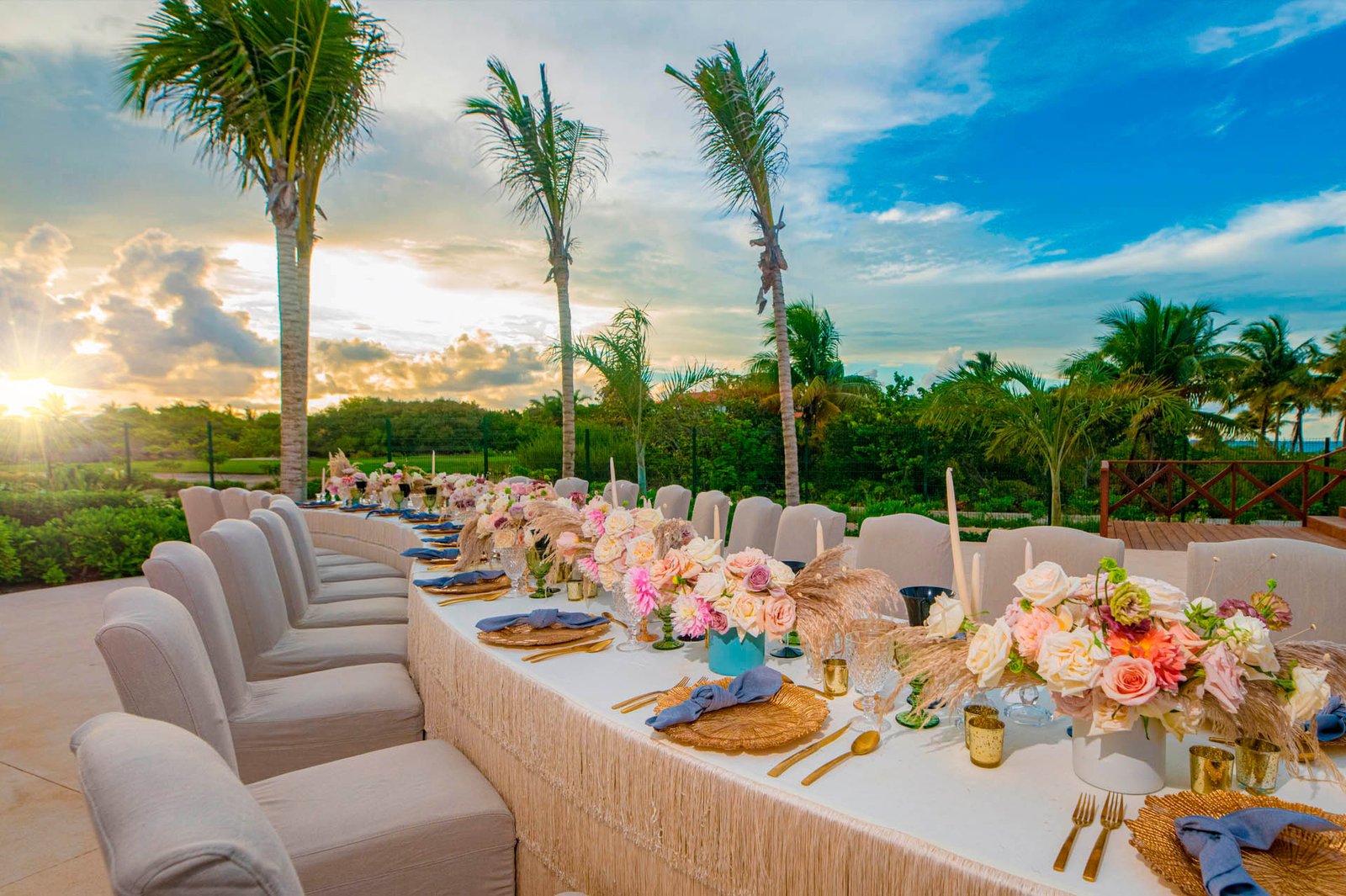
- Décor above the package - centerpieces, aisle florals, linens, lighting. This scales with your choices far more than with your headcount.
- DJ or live music for a private reception.
- Hair and makeup - priced per person in the wedding party, not per guest.
- An on-site coordinator for the wedding day - typically an additional fee, and worth budgeting deliberately if you want someone physically on the ground running your timeline. Vendor sourcing itself - photographers, décor teams, entertainment - is something we do for you in house, at no charge.
- Airport transfers - the resort’s distance from the airport, times your guest list, two ways.
- Welcome bags - one per room, not one per guest. A small saving people miss.
Why couples pay less booking through us
This is the part we are unapologetically direct about, because it is the whole reason WeddingPlan360 exists.
- We charge no wedding planning fees. Our service is free to couples - the resorts pay us, the way hotels pay travel agencies. The $500 to get started is a deposit credited toward your venue booking, not a fee. You pay the resort and your vendors. You do not pay us.
- We hold contracts directly with our resorts. That means wholesale group rates on room blocks that are usually sharper than anything you can get by calling the resort yourself - backed by a best price guarantee. It has not happened yet, but if you ever do find a better rate for the same resort and dates, we will do whatever we can to match or beat it.
- We are constantly negotiating on your behalf. Not once at signing - all the way through. Comp-room ratios, package inclusions, venue-fee waivers at volume, stretching a semi-private arrangement past its usual limit on a quiet date, re-opening a rate when the resort’s season softens - these are conversations we are having for our couples every week, and they are worth real money.
- We will tell you when a resort is the wrong fit. If the venue that made you fall in love seats fewer than your guest list, you will hear it from us before you sign, not after. Getting the most out of every dollar only works if someone in the room is honest about the trade-offs.
Frequently asked questions
Is there a guest count that is cheapest per person?
Generally, per-person cost falls as the group grows - larger blocks earn comp rooms and unlock waived fees and package discounts, and fixed costs spread across more people. Wherever your number lands, we price the structures available at that size before you finalise your list, so the format works for you rather than against you.
How many of our invitees will actually come?
The industry average runs around 40 to 60% of the invite list - but our couples usually see more show up than that. The wholesale room rates we lock in make the trip genuinely affordable for guests, and many treat the wedding as their own vacation and stay longer because of the rates we achieve for them. Invite generously; we will structure the room block so the numbers work either way.
Do we have to pay a per-person reception cost?
Not necessarily. Reception structures vary by resort, and at a select number of properties there is no per-person cost at all - guests’ all-inclusive bookings cover the celebration and you pay only for décor and entertainment. Small groups also often qualify for lovely semi-private dinners at no extra cost. Which structure fits best depends on your size, resort and dates - exactly what we shop for you.
Do you charge wedding planning fees?
No. Our planning service is free to couples - the resorts pay us. The $500 to get started is credited toward your venue booking. If a planner is charging you thousands in fees on top of resort prices, ask what those fees are buying that the resort relationship should have covered.
When do we need to lock everything in?
Contract 12 to 18 months out for a peak-season Saturday; six months is a working minimum. Many resorts stop offering room blocks 30 to 90 days before the date, which is the deadline that catches couples out. Our full timing guide walks through it.
What is the biggest budget mistake couples make?
Choosing the resort emotionally, then discovering the venue that made them fall in love seats fewer people than their list. Capacity first, then price, then aesthetics - in that order.
Getting real numbers for your wedding
Ranges are honest, but your wedding has a date, a destination and a guest list - and with those three things we can put actual quotes in front of you against real properties, at our contracted rates. The same wedding swings enormously between a September midweek date at a large all-inclusive and a February Saturday at a boutique property; our month-by-month guide shows why.
Want a working number right now? Our cost estimator gives you one in about a minute - treat it as a starting point, since the figure we put in front of you on a call is confirmed against the resort’s actual contract. Then book a free planning call and we will price your wedding properly - and tell you honestly where your money works hardest.
A note on the prices shown here
Every rate on this page is published by the resort and is included to give you a rough idea of pricing only. Resort pricing changes without notice and varies by date, season, day of the week, guest count, room availability and exchange rate. Figures may also be quoted before tax and service charge.
Nothing on this page is a quote, an offer or a guarantee of availability. For a current, all-in figure for your date and guest count, book a free planning consultation and we will confirm the real numbers with the resort.