The dress code on a wedding invitation is a request, not a riddle. Below are the six Western codes you are most likely to see, from white tie down to beach formal, each shown on a man and a woman, plus what to wear across the events of a South Asian wedding. Each of the six codes ends with what changes at a resort in Mexico or the Caribbean, where heat, sand and a ballroom set to 68 degrees all have a say.
The outfits shown are AI illustrations created for this guide.
Every dress code at a glance
| Dress code | Women | Men | Usually means |
|---|---|---|---|
| White tie | Floor-length ball gown | Tailcoat, white waistcoat, white bow tie | A rare, very formal evening |
| Black tie | Floor-length gown | Tuxedo and black bow tie | An evening reception, from about 6 p.m. |
| Black tie optional | Gown, long or midi dress, or a formal cocktail dress | Tuxedo, or a dark suit and tie | Evening, with room to choose |
| Formal | Long or dressy midi dress | Dark suit and tie | Evening at a hotel or resort |
| Cocktail or semi-formal | Knee-length or midi dress, dressy separates | Suit and tie | Late afternoon or early evening |
| Beach formal | Flowing long dress, flat sandals | Linen or cotton suit, tie optional | A ceremony on the sand |
| South Asian wedding | Lehenga, saree or anarkali | Kurta, Nehru jacket or sherwani | Several events over two or three days |
White tie
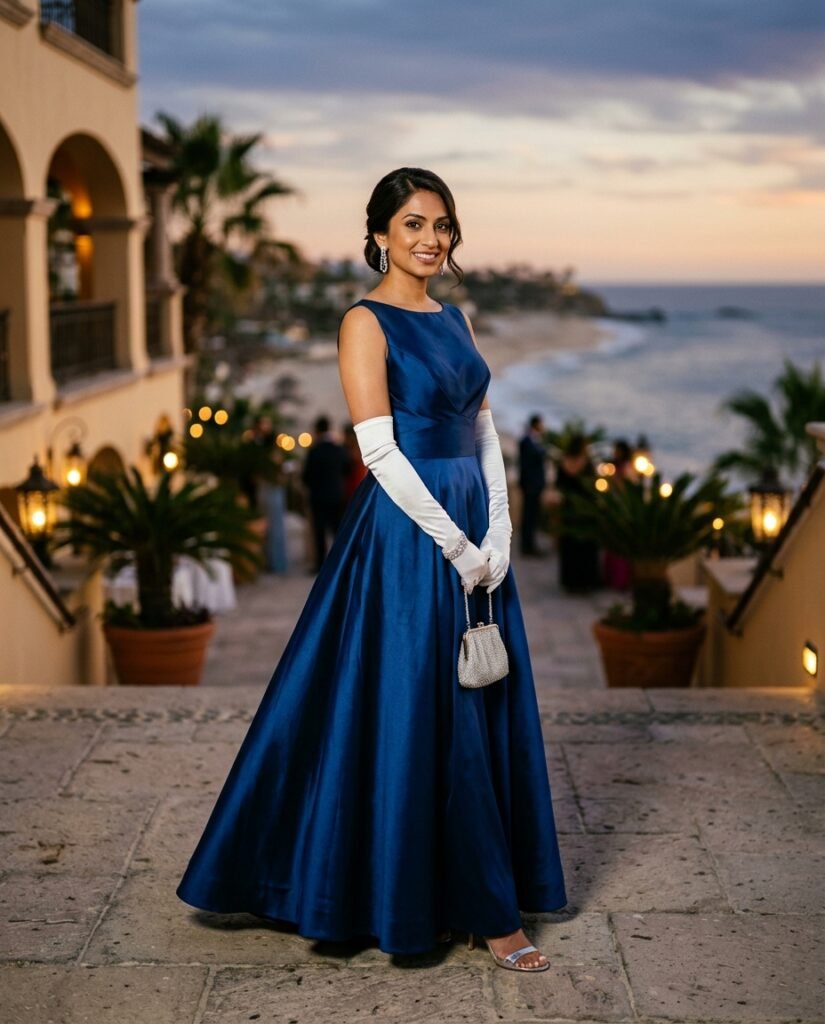
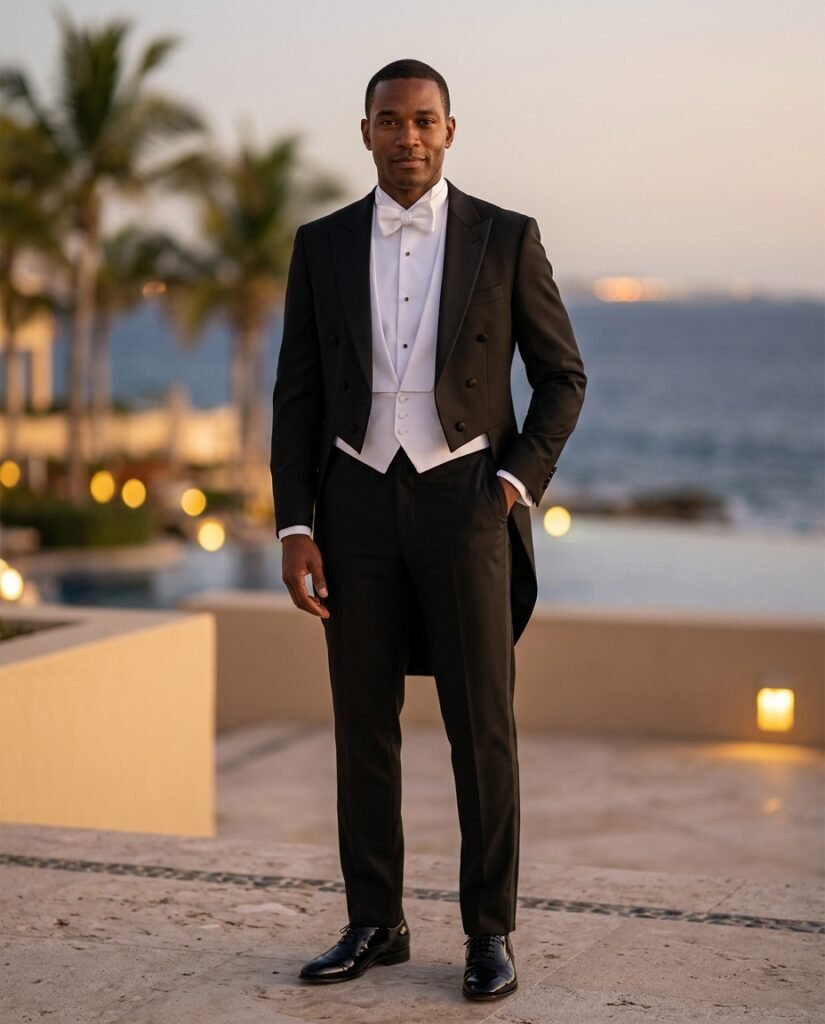
The most formal code there is, and the rarest. If an invitation says white tie, the couple means it.
Women: a floor-length ball gown in silk, satin or taffeta. Long gloves are traditional; you take them off to eat. Keep jewelry fine rather than big, and wear your hair up or neatly back.
Men: a black tailcoat with matching trousers trimmed with satin braid down each leg, a white piqué waistcoat, a white wing-collar shirt with studs, a white bow tie and black patent shoes. A tuxedo is not white tie, and neither is a black bow tie.
At a resort: do not count on renting a tailcoat after you land. Rent or buy one at home before you fly.
Black tie
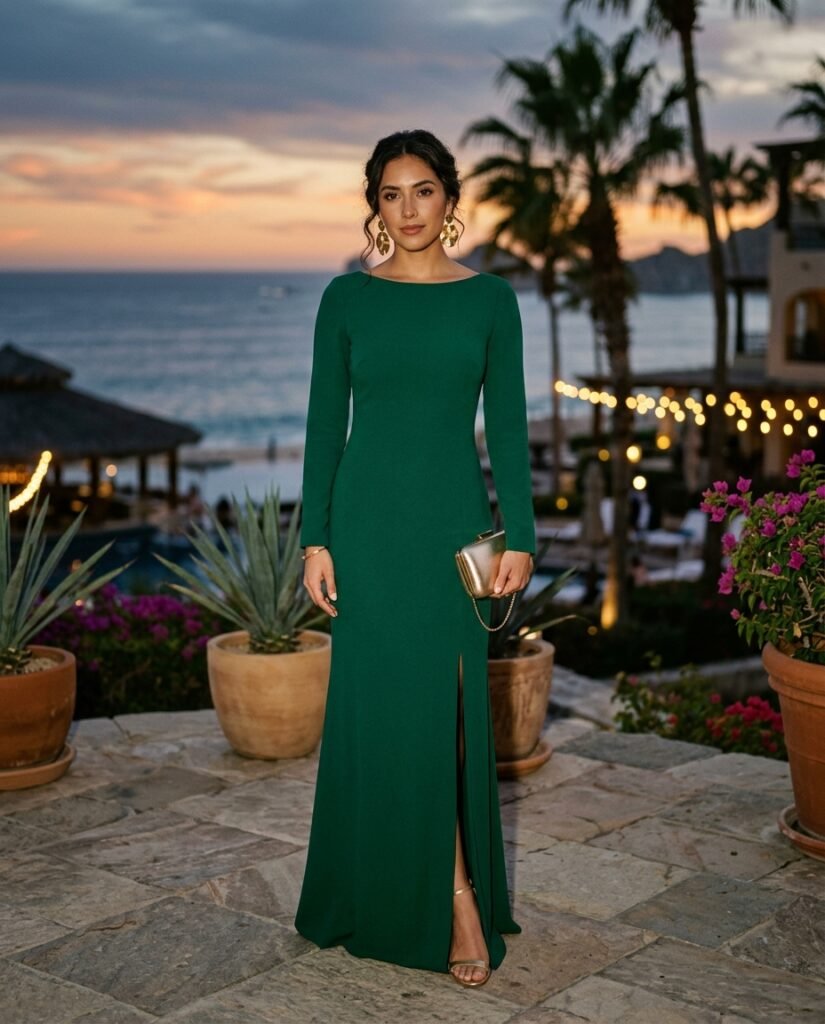
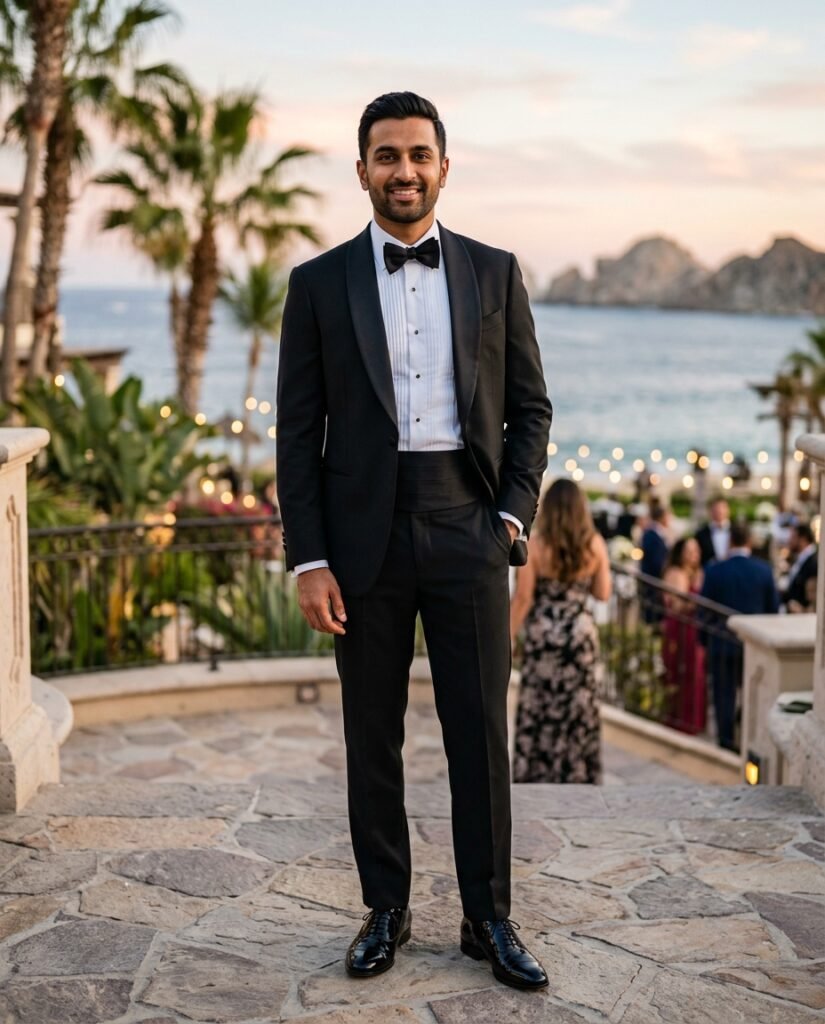
The standard for a formal evening wedding, usually from about 6 p.m.
Women: a floor-length gown. Clean shapes in crepe, satin or chiffon look right. A very dressy cocktail dress only works if the couple has said so. Metallic shoes and a small clutch finish it.
Men: a black or midnight blue tuxedo with a satin shawl or peak lapel, a white dress shirt, a black silk bow tie, a cummerbund or waistcoat, and black patent or highly polished shoes.
At a resort: choose a tuxedo in tropical-weight wool, which breathes far better than a standard one. The ceremony may be outside at sunset and the reception in an air-conditioned ballroom, so the jacket earns its keep later in the night.
Black tie optional
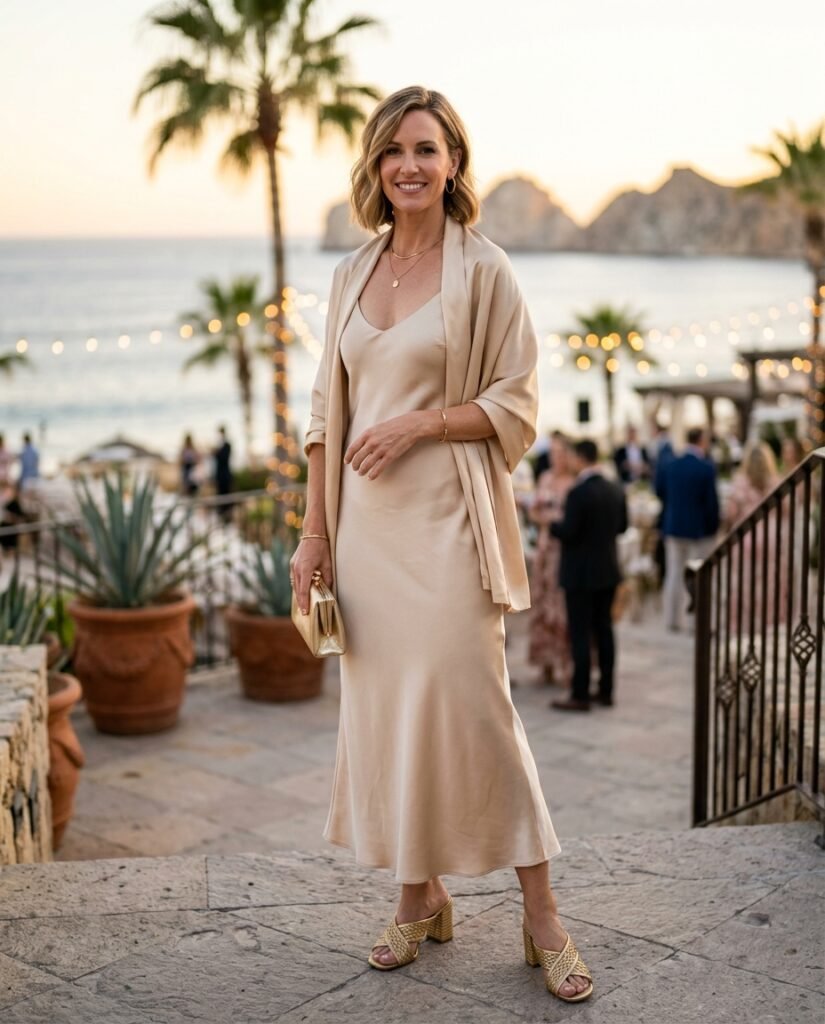
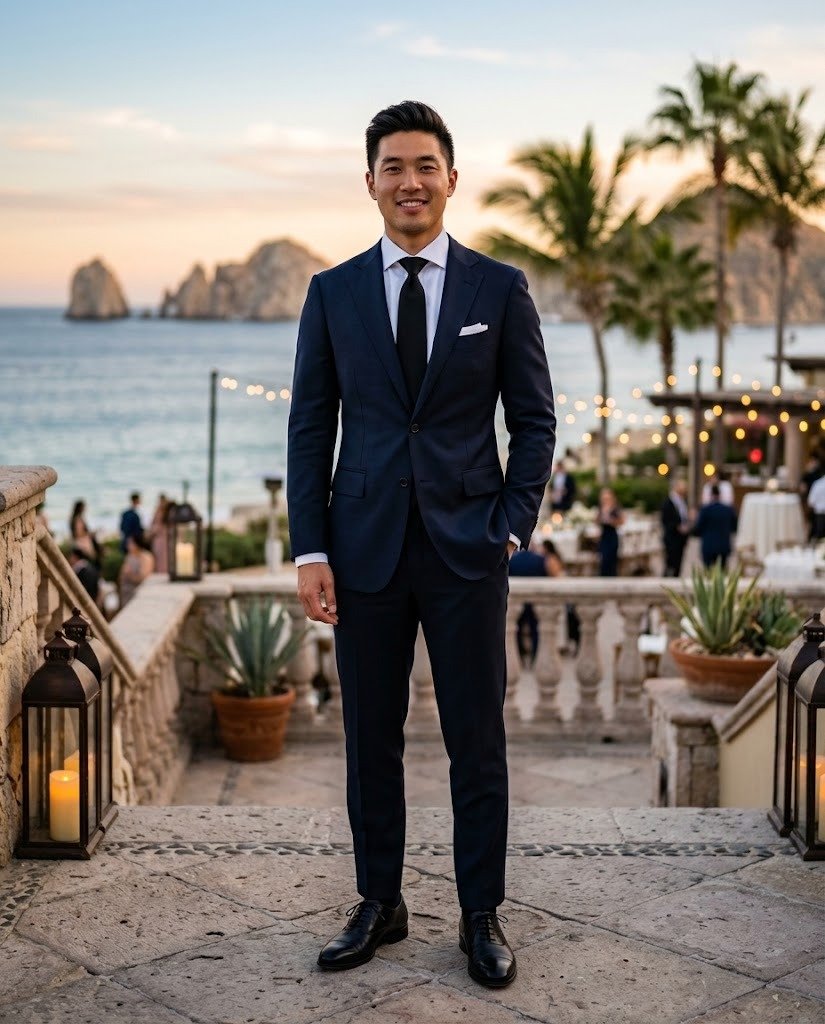
The couple will be in formalwear and would love you to be, but a dark suit is welcome.
Women: a floor-length gown, an elegant ankle- or midi-length dress, or a dressy knee-length cocktail dress, all in rich fabrics. A satin slip dress with a wrap sits between the gown and the cocktail dress.
Men: a tuxedo, or a navy or charcoal suit with a white shirt and a dark silk tie. Skip light gray and tan here; they read as daytime.
At a resort: if you are packing light, one well-cut dark suit covers black tie optional, formal and cocktail.
Formal
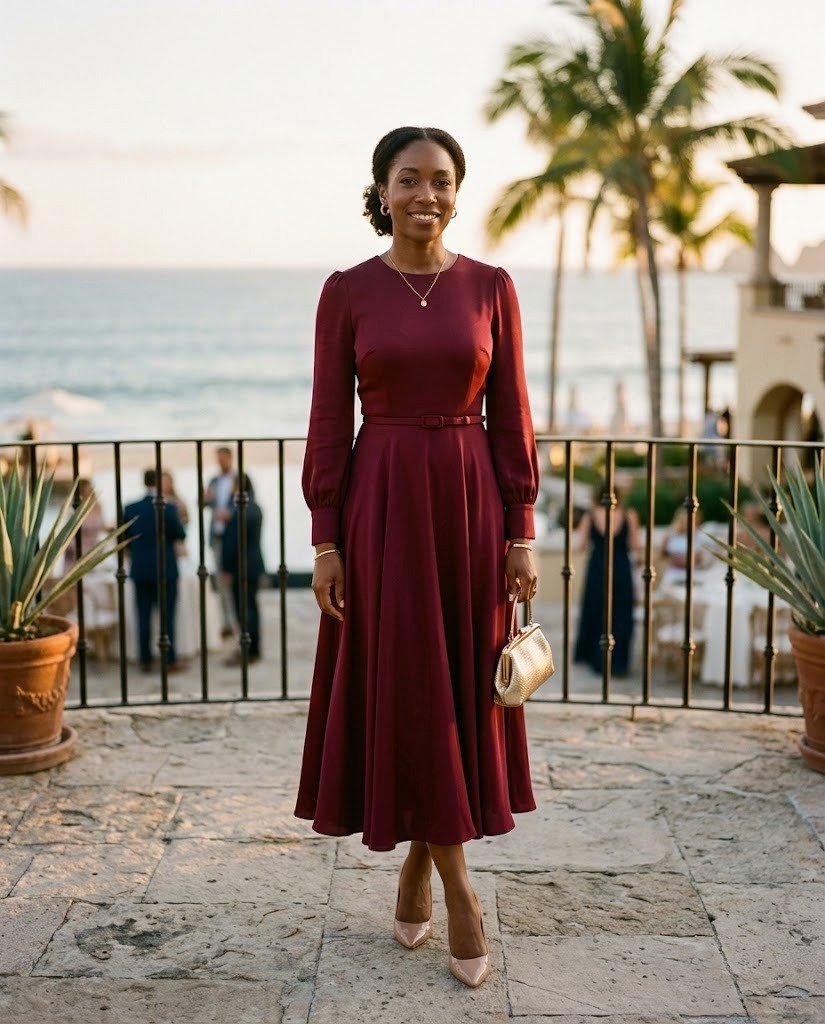

Also written as formal attire or evening formal. Many guides treat it as the same code as black tie optional; the practical difference is that nobody expects a tuxedo.
Women: a long or dressy midi dress in silk, crepe or satin. Deep colors such as burgundy, emerald and navy look right after dark.
Men: a dark suit, a dress shirt and a tie, with leather dress shoes and a belt that matches them.
At a resort: if the invitation names no dress code and the reception is in the evening, dress formal. It is the safe choice.
Cocktail or semi-formal
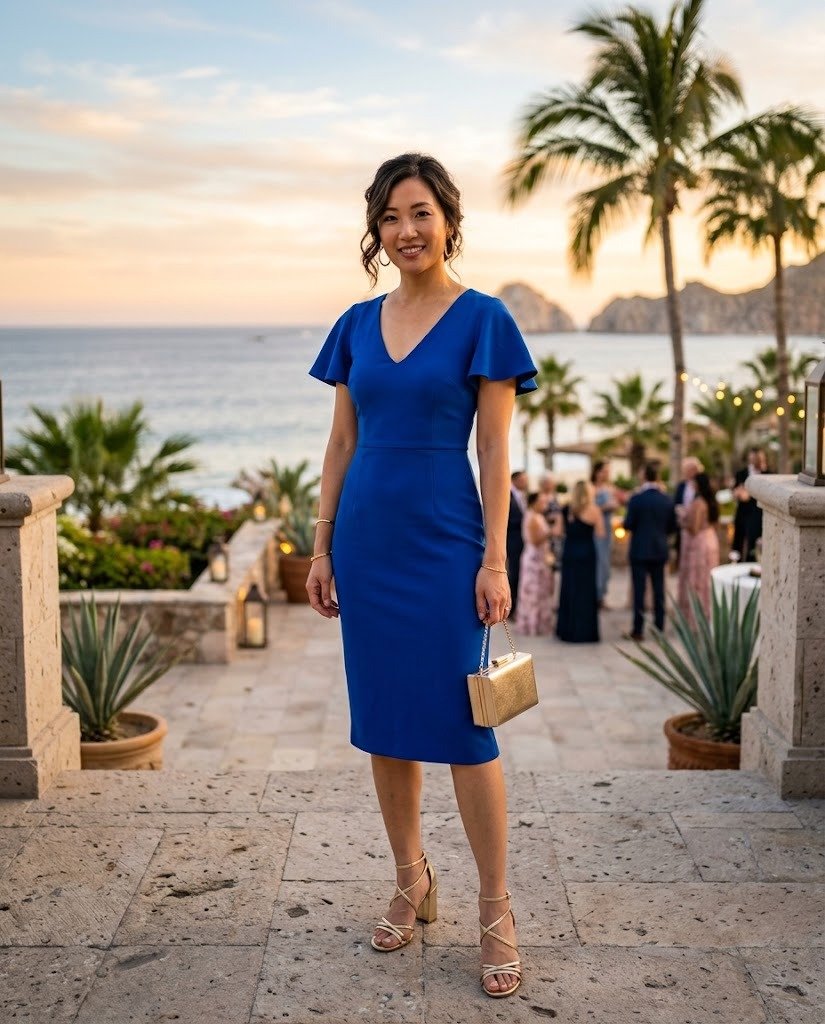
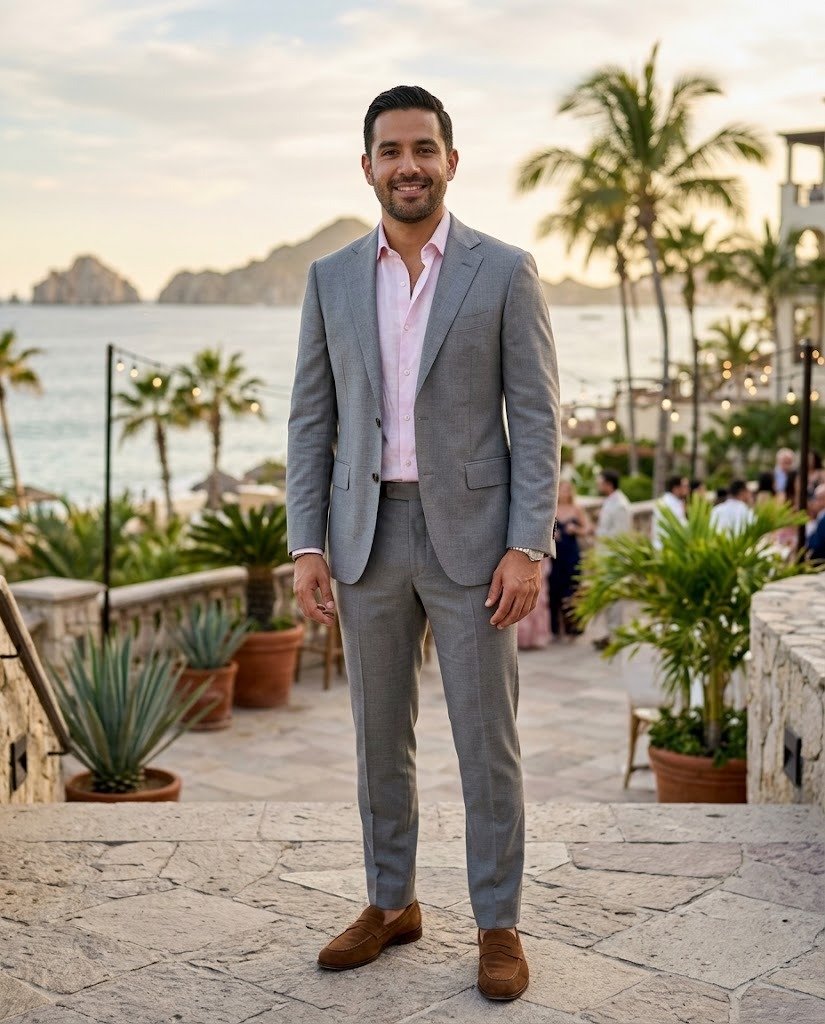
For late afternoon and early evening weddings, and the code with the most room to play.
Women: a knee-length or midi dress, a dressy jumpsuit or elegant separates. Brighter colors and prints are fine.
Men: a suit in any color that fits the season, with a tie unless the couple says ties are optional. Loafers work.
At a resort: linen blends and lighter suits make sense for an outdoor cocktail hour. Bring a light layer for the air-conditioned reception.
Beach formal
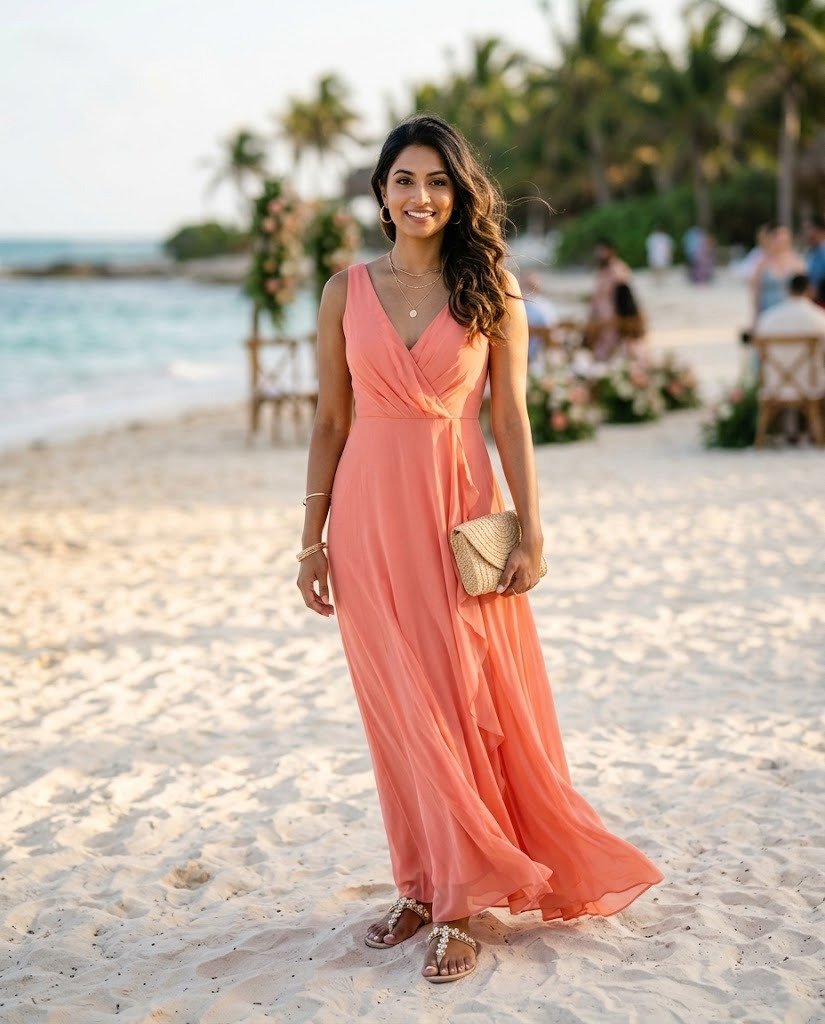
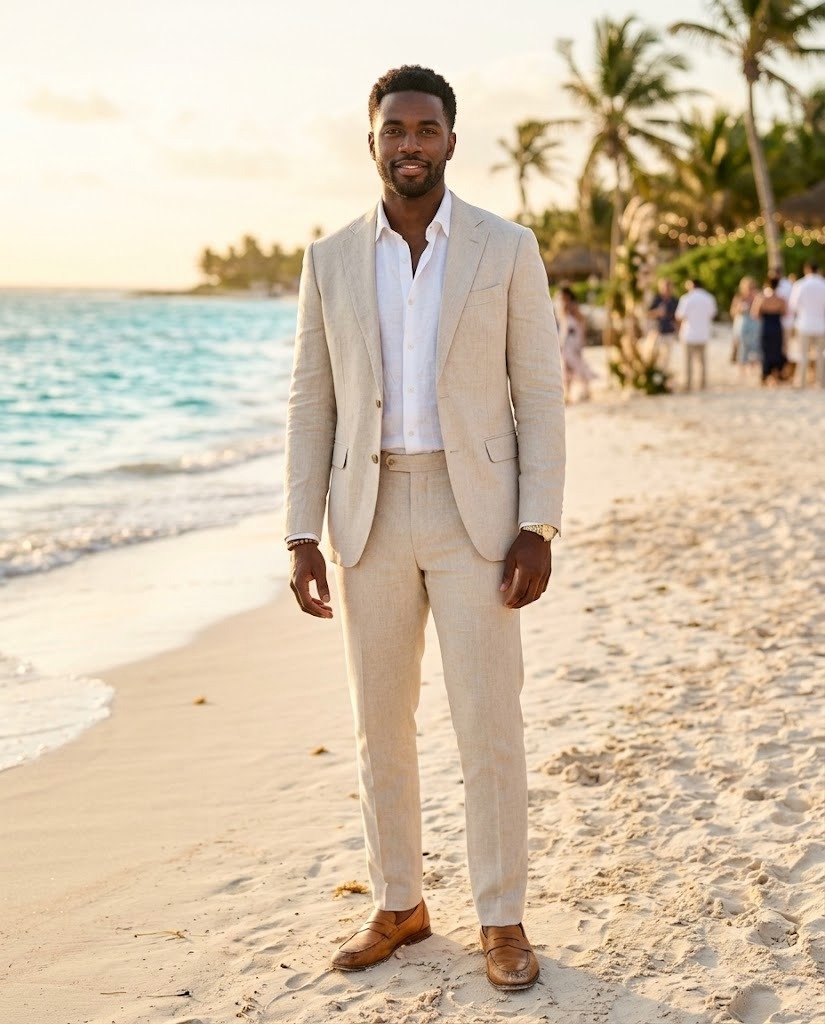
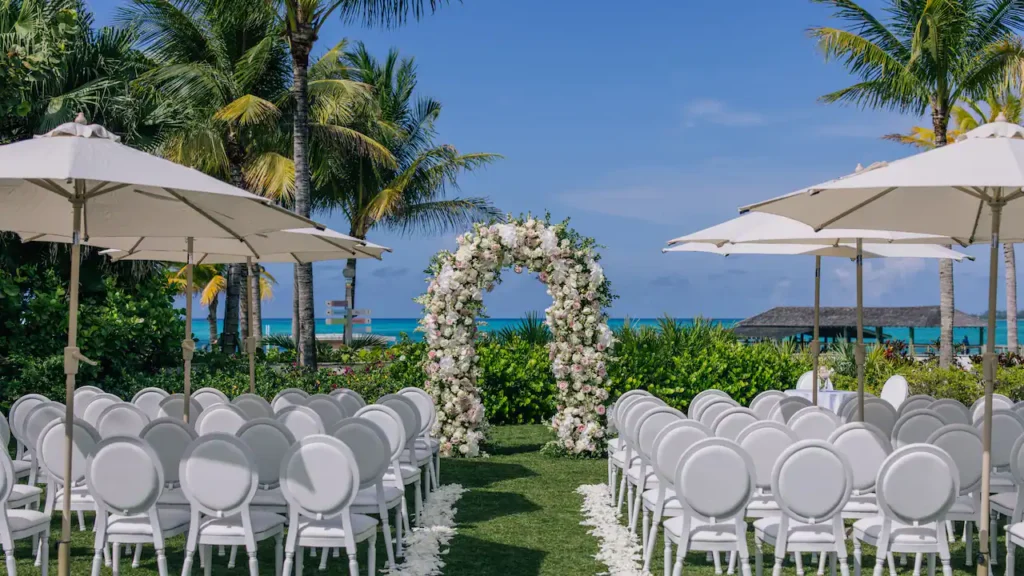
A formal wedding whose ceremony is on sand. Dress up, but for the setting.
Women: a flowing long dress in chiffon, silk or a linen blend, with flat or wedge sandals. Stilettos sink.
Men: a linen or light cotton suit in sand, beige, light gray or pale blue, a crisp shirt with the tie optional, and loafers or leather sandals. Socks are optional too.
At a resort: wind and humidity decide more than the dress code does. Pick fabrics that move and a hairstyle that survives a breeze, and bring a wrap for the evening.
What to wear to a South Asian wedding
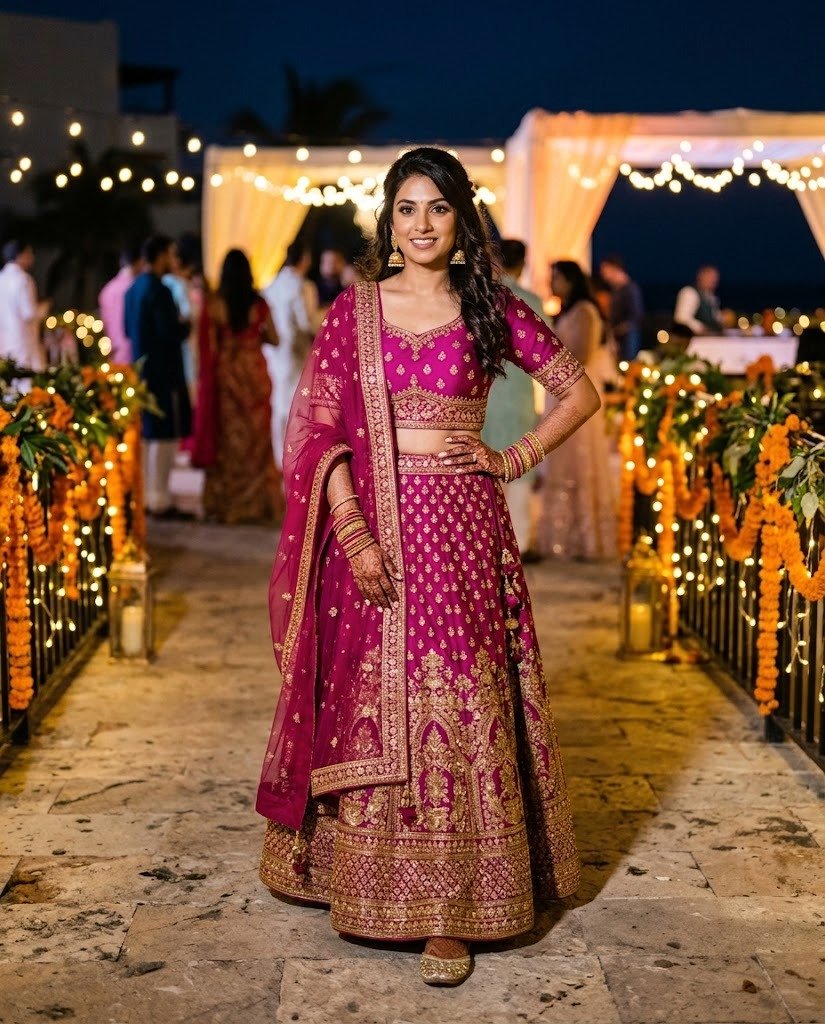
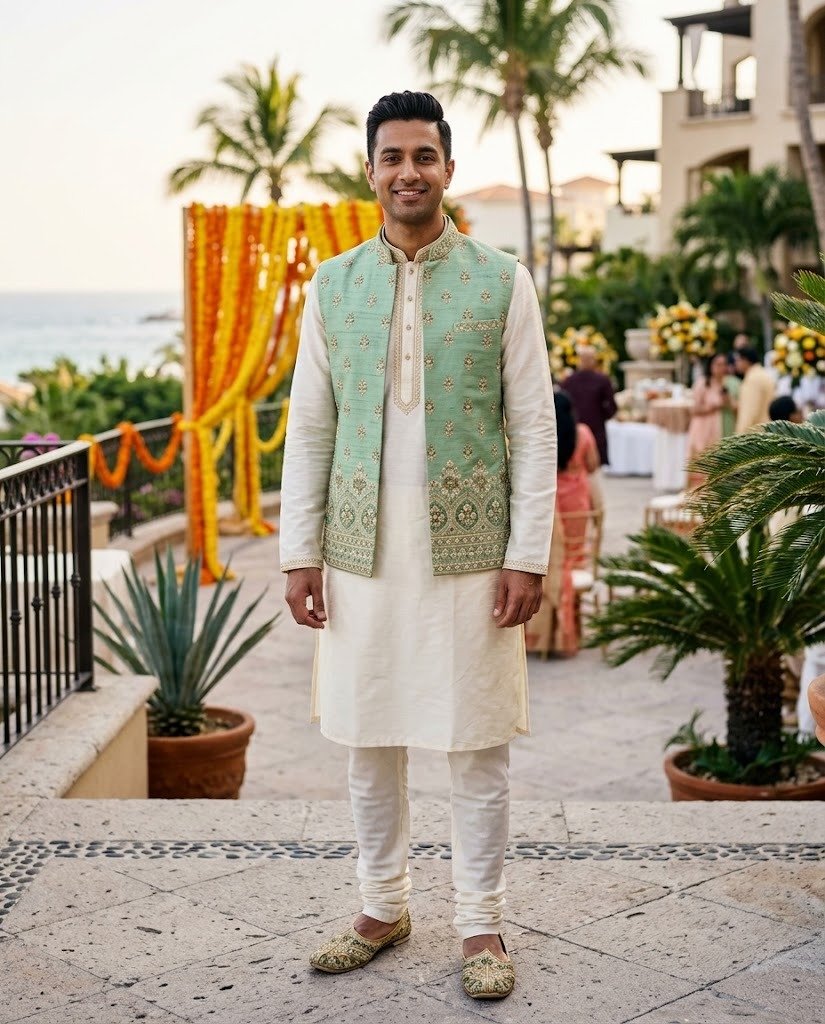
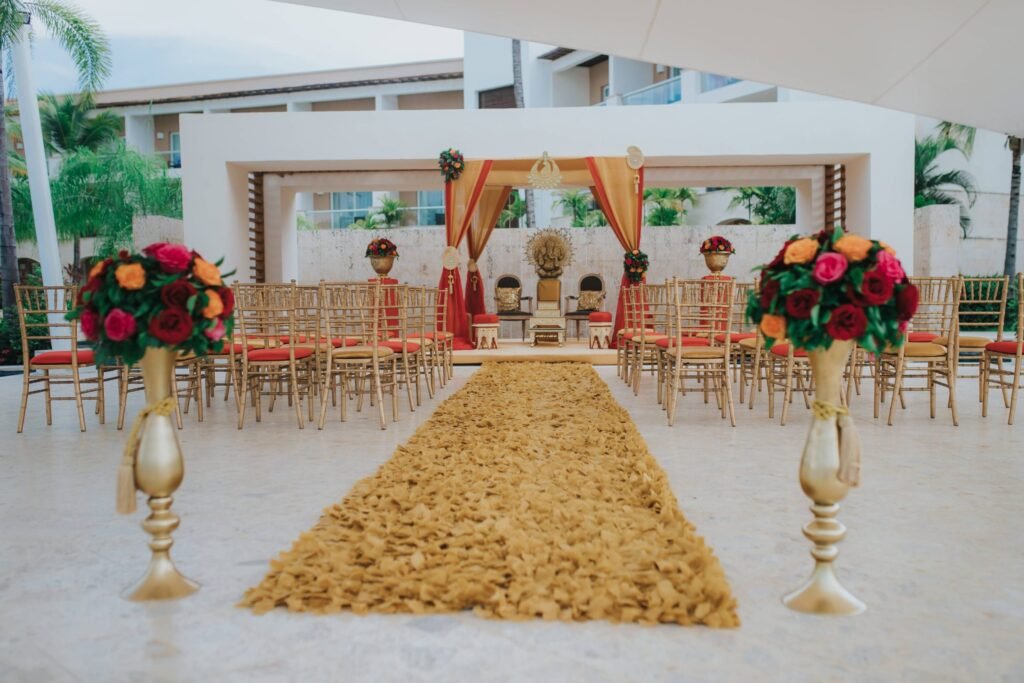
A South Asian wedding is usually several events over two or three days, and each has its own mood. The lineup varies by family and tradition: a Gujarati wedding may add a garba night, a Muslim wedding usually includes a nikah and a walima, and many South Indian weddings have no sangeet at all, so follow the schedule the couple sends. Guests of every background are welcome to wear South Asian clothes, and most couples love it.
- Mehndi: bright and relaxed. Greens, yellows and florals, in clothes you can sit comfortably in while henna dries. If there is a haldi, wear yellow you do not mind ruining; turmeric paste gets on everyone, and it stains.
- Sangeet: the party night. Lehengas, sarees and sharara sets with some sparkle for women; a kurta with a Nehru jacket, or an Indo-Western suit, for men. Wear shoes you can dance in.
- Ceremony: the most traditional event. Sarees, lehengas, anarkalis or a salwar kameez for women; a kurta pajama, with or without a Nehru jacket, or a sherwani for men. At a Sikh Anand Karaj, everyone covers their head and removes their shoes, and guests usually sit on the floor, so wear something modest you can sit cross-legged in and bring a scarf or use one the family provides. At a Muslim nikah, keep shoulders and legs covered; women may be asked to cover their hair, so bring a dupatta.
- Reception: often Western formal or Indo-Western. Follow the invitation.
Colors: skip red, which many brides wear, and all white, which some families associate with mourning. Black is fine at most sangeets and receptions but best avoided at the ceremony. When in doubt, ask the couple.
Buying: order South Asian outfits eight to ten weeks ahead, since custom stitching and shipping from India can take six weeks before any alterations. A saree also needs a blouse stitched to your measurements. For where each event usually happens at a resort, see Indian wedding ceremonies in Cancun.
Rules that apply to every code
- White and ivory belong to the bride, unless the couple asks for an all-white party.
- If the couple shares a color palette for the wedding party, choose something that does not match it exactly.
- Check the ceremony surface. Grass and sand punish thin heels.
- Pack formalwear in a garment bag as carry-on and bring a travel steamer, or ask housekeeping to press it.
When the invitation says nothing
Look at the time and the venue. An evening reception at a resort means cocktail at the least, and formal is the safer choice. A morning or afternoon ceremony on the beach means beach formal or cocktail. If you are still unsure, ask the couple; they would rather answer than see you uncomfortable.
Planning your own wedding? Once you pick a dress code, send this page to your guests along with what the trip will actually cost them. If you want help choosing a resort that fits the look you have in mind, tell us about your wedding.